How to document a construction project, from the first call to the last photo
The reason this website exists is that I kept almost everything. The reason parts of it still say “date being confirmed” is that I did not keep it in order. Do both.
Where this comes from
My project record
A documented project is one where every claim can be matched to a date, a photo or a piece of paper. You will not need most of it. If the job goes wrong, you will need all of it, and you will need it fast.
Start a folder on day one
One folder, cloud-synced, named for the project. Subfolders: contract, payments, plans, permits, photos, messages, invoices. Every file goes in the day you get it.
Save the contract as it was sent, not as it was printed
The e-signature certificate shows who sent what and when it was completed. Mine shows the packet was sent February 13, 2026 and completed February 20. That is a date no one can argue with.
Keep every payment confirmation
Wire confirmation numbers, bank screenshots, the email you sent the office with the confirmation. Build a ledger as you go: date, amount, payee, what it was for, which confirmation proves it. I am rebuilding mine after the fact, which is why the site says “about $93,000” instead of an exact figure.
Photograph every stage before it is covered
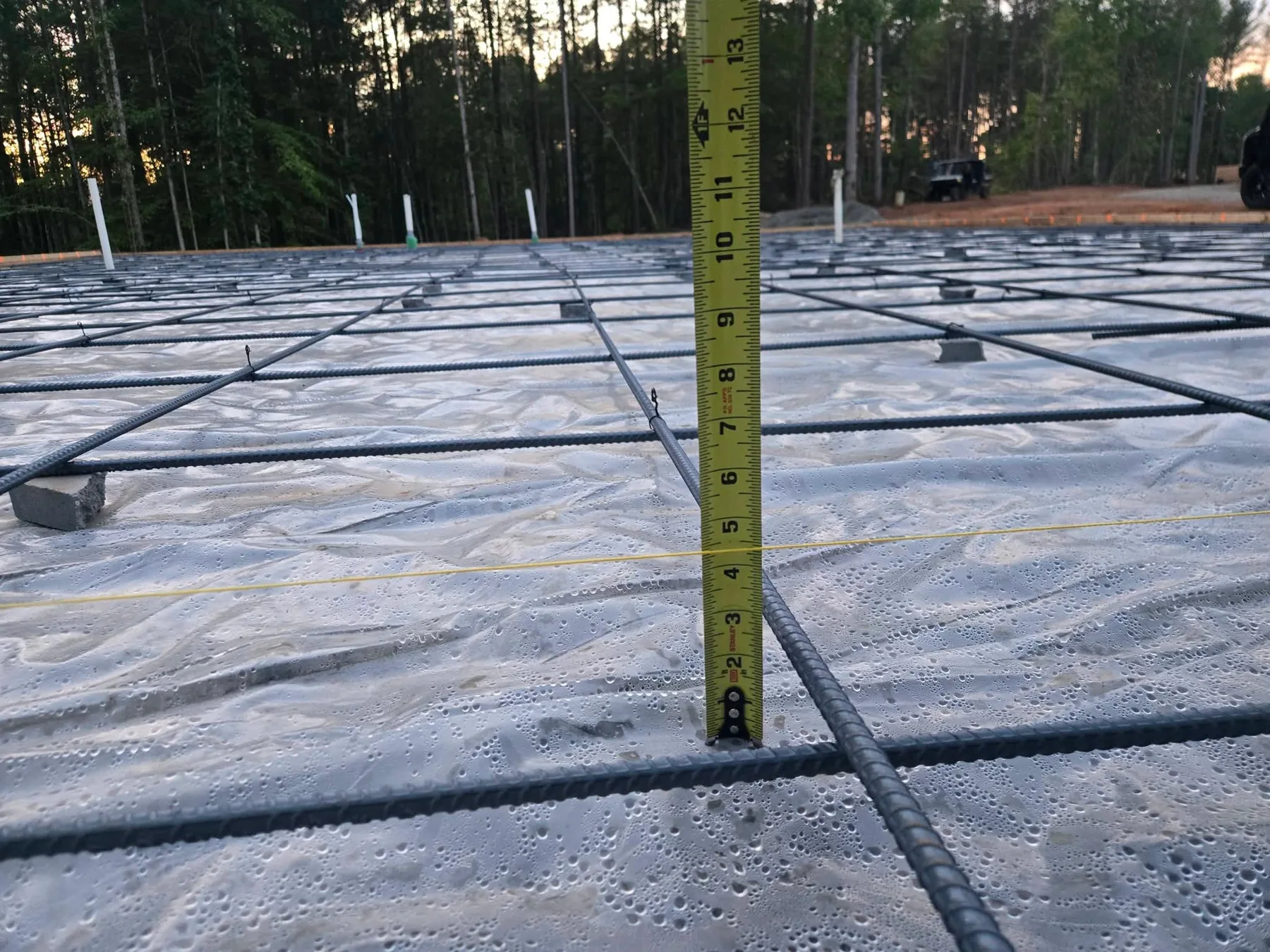
The footing trench with a tape in it. The prepared pad with a tape at the string line. The reinforcement on chairs. The plumbing stub-ups standing straight. Each photo should have something in it that shows where on the site you are. Leave the camera’s date and location data on the originals; strip it only from copies you publish.
Measure and write it down
Depth, width, thickness, in several places. A photo of a tape is good. A sketch with ten readings is better. Date it and send it to the company the same day so there is a time stamp on the other end.
Keep communications in writing, and export them
After every phone call, send a short text or email: “Confirming what we discussed: crew arrives Monday, lift is on site through Friday, anything past that runs through you.” If they reply “yes,” you have a document. Export text threads to PDF monthly. Screenshots are good; a full export with time stamps is better.
Be at every inspection with the plans
Ask the inspector what they measured and what they found. Write it down while you are standing there. Request the written report from the county afterward. The county file is a public record and it is the most neutral evidence you will ever have.
Log the days
A one-line daily log: who was on site, what they did, what equipment was there, what you paid for. When a crew is five days late and the rented lift is burning money, the log is what turns a feeling into a number.
Keep an evidence manifest
A simple table: ID, file name, date, who created it, what it shows, which claim it supports. When you need to hand a folder to an attorney, an inspector or a licensing board, the manifest is the first page.
Say only what the evidence shows
A photo of a crack proves a crack. A photo of a leaning pipe proves a leaning pipe. If you write “they broke it,” be ready to show how you know. On this site, every photo caption follows that rule, and every opinion is labeled as one.
Why a customer wrote this
In February 2026 I signed a $98,750 contract with L&G Building & Concrete of Asheboro, North Carolina. By September I had a cracked slab, damaged plumbing and half a steel frame. This site documents it, with the contract, photos, texts and public records. The resources exist so the next buyer does not need to learn the same things the same way.
General information from one customer’s experience and research. Not legal, engineering or financial advice.